
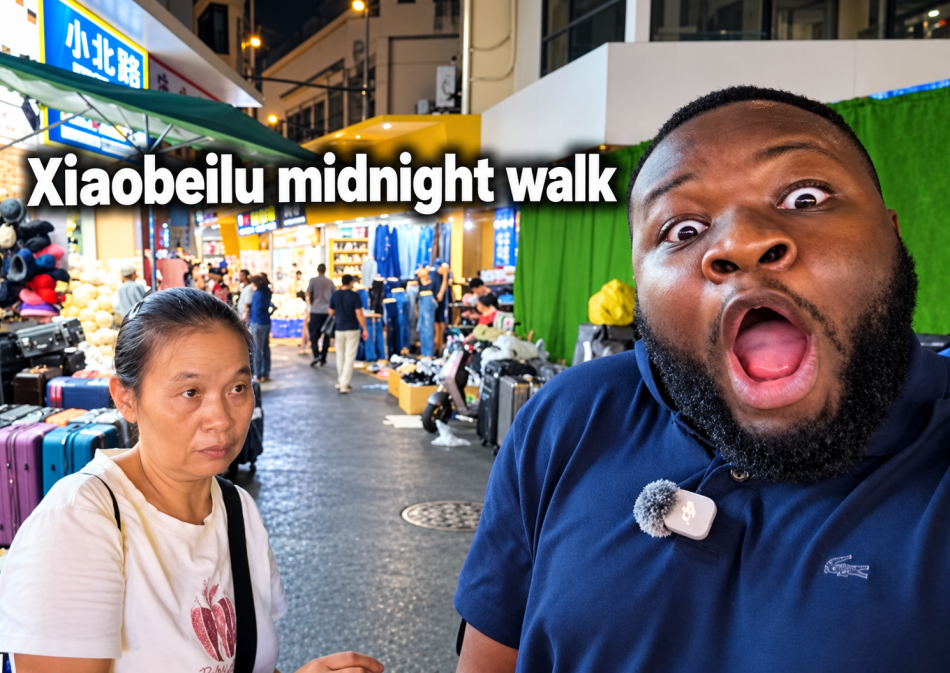
In 2016, CNN described Guangzhou’s “Little Africa” as a place in decline, asking whether African migrants were giving up on the Chinese dream. Ten years later, this recent video by Zimbabwean creator Harmony2nd offers a very different glimpse of Xiaobei after dark: crowded streets, African shoppers and traders, Chinese wholesalers, Middle Eastern and South Asian residents, imported food shops, livestream sellers and continuing police checks.
The point is not that Xiaobei has remained unchanged. It clearly has not. As I argued in The Scramble for Xiaobei, the neighbourhood was never simply an “African enclave” waiting to be discovered. It was also produced through years of journalistic, academic and visual representation as a racialised urban object—first spectacularised as “Little Africa,” and later narrated as disappearing.
Perhaps what disappeared was not African Xiaobei itself, but a particular version of Xiaobei that journalists and researchers had learned how to see.
Harmony2nd’s video is interesting precisely because it shows a different urban formation: more mixed, more digitally mediated, and still deeply connected to transnational African commercial and social life.


…me gustó mucho su actitud…excelente ánimo…
*ARQ. J. CASTILLO O. *